SS
The Tattooist of AuschwitzThe SS (Schutzstaffel) stands as the monolithic engine of terror and administration within the world of The Tattooist of Auschwitz. It is the organization that transforms ordinary men into prisoners, strips them of their names and identities, and subjects them to a regime of arbitrary violence, starvation, and systematic murder. For Lale Sokolov, the SS is not an abstract political entity but the immediate, ever-present force that dictates every aspect of his existence, from the moment he steps off the cattle train to the day he finally walks free. The organization's power is embodied in its uniforms, its rituals, and its individual officers, each of whom represents a different facet of its capacity for cruelty and control.
The Arrival and the Architecture of Deception
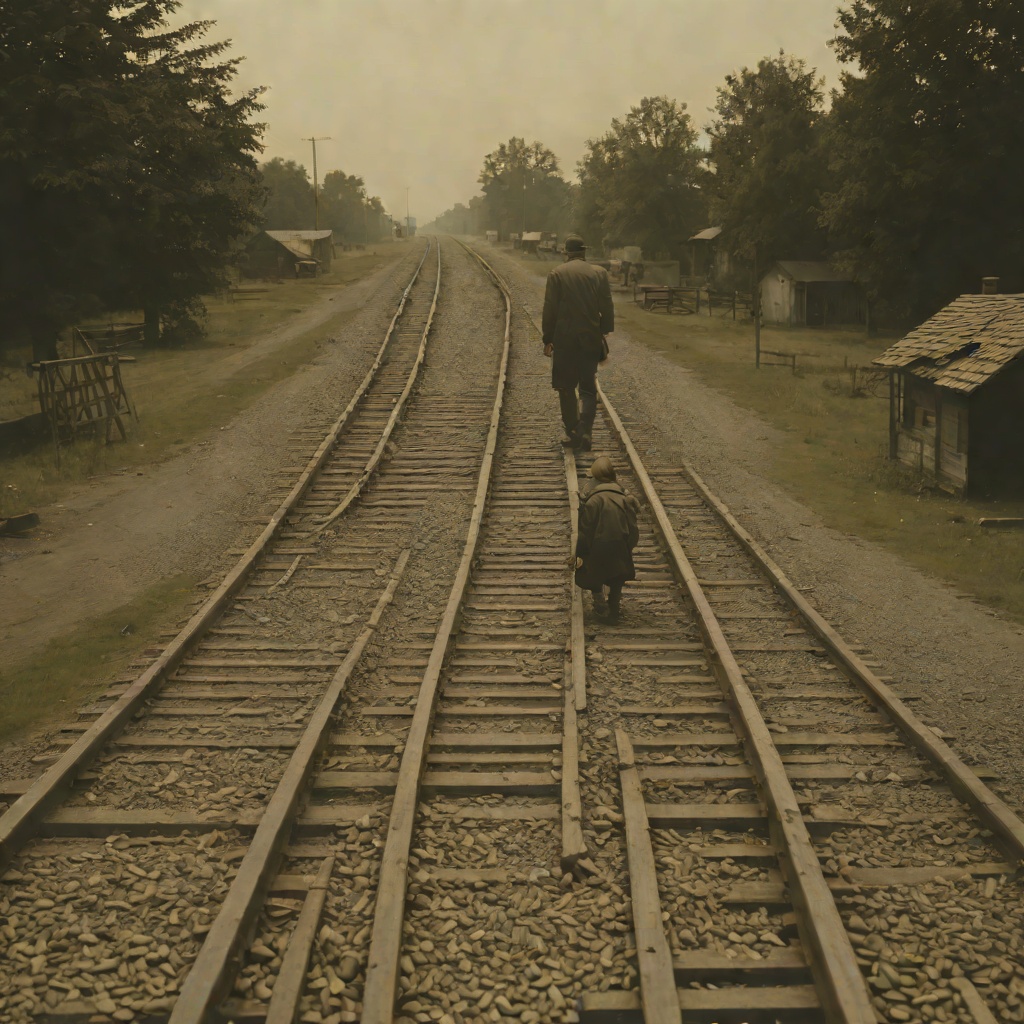
The SS's first overwhelming impact on Lale comes at the moment of his arrival at Auschwitz. After days on a cattle train, he and the other men are forced onto the gravel, where the SS presence is immediately established through violence and intimidation. Lale studies the men in uniform, noting their black, threatening appearance and the twin lightning bolts on the collars of their jackets, which tell him exactly who he is dealing with. Even in this moment of terror, he cannot help but appreciate the tailoring and the sharpness of their cut, a detail that underscores the SS's carefully cultivated image of power. The organization's deceptive promise is articulated by Commandant Rudolf Hoess himself, who welcomes the new arrivals with the words "Welcome to Auschwitz" and delivers the camp's first lesson: the gates say "Work makes you free," and hard work and obedience will lead to freedom. This speech, delivered with a barely moving mouth and interrupted by thunder, is a clumsy but intimidating performance that establishes the SS's authority through a lie. The processing that follows, where prisoners are shoved forward to tables and given small receipts with numbers, completes the initial dehumanization, replacing names with numbers in a bureaucratic ritual that the SS has perfected.
The SS as an Instrument of Mass Murder
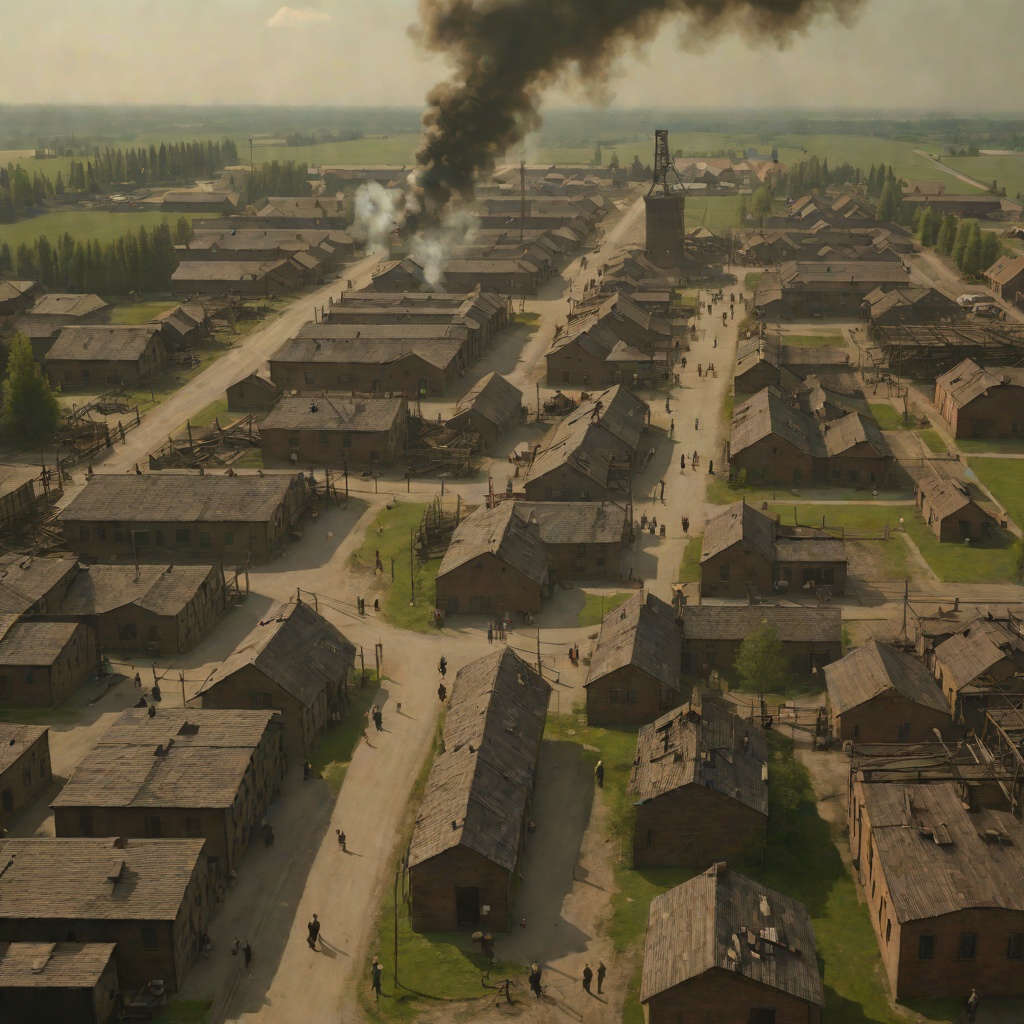
The SS's ultimate purpose is revealed in the horror of the gas van at Birkenau. Lale, driven by curiosity, follows a large, enclosed truck to the back of the administration building, where he witnesses an adapted bus with steel plates nailed across its window frames. Dozens of naked men are herded out of the truck, some entering willingly while others are hit with rifle butts and dragged by fellow prisoners. The bus is packed so full that the last men cling to the steps with their tiptoes, their naked bottoms hanging out the door. An officer walks around the bus, rapping on the metal sheets to check that everything is secure, before a nimble officer clambers onto the roof with a canister, opens a small hatch, and upends it. As the bus shakes violently and muffled screams can be heard, Lale drops to his knees, retching in the dirt. This scene is the SS's true face, stripped of the pretense of work and freedom, revealing the organization as a machine designed for mass extermination. The cold, methodical efficiency of the operation, from the herding to the checking of the seals to the canister on the roof, shows the SS as bureaucrats of death, processing human beings with the same detachment as any other logistical task.
The SS and the Tätowierer's Privilege
The SS also creates and maintains the camp's internal hierarchy, granting Lale a precarious position of privilege as the Tätowierer. Oberscharführer Stefan Baretski, the SS officer who becomes Lale's immediate superior, leads him to a single room in a newly completed block, located immediately inside the door, where he will sleep alone. This isolation from his friends in Block 7 is a mark of his special status. Lale learns that he will take his meals in an area near the administration building and receive extra rations, with Baretski explaining, "We want our workers to have their strength." This privilege is a tool of control, binding Lale to the SS through a combination of fear and dependence. The relationship between Lale and Baretski is complex, as Lale discovers that Baretski is not German but was born in Romania, near the border of Slovakia, only a few hundred miles from Lale's own hometown of Krompachy. Baretski ran away to Berlin and joined the Hitler Youth and then the SS, and he hates his father, who beat him and his siblings viciously. This personal history humanizes the SS officer, but it also reveals how the organization recruits and molds individuals, channeling their personal traumas into instruments of state violence. The SS's power is thus not only external but also internalized, as men like Baretski find in it a new identity and a new family.
The SS's Arbitrary Terror and the Threat of Mengele
The SS's authority is exercised through constant, unpredictable terror, personified by Josef Mengele. During the tattooing of young girls, Lale glances up to see a man in a white coat slowly walking up the row, stopping to inspect the face and body of each terrified young woman. When he reaches Lale, he takes the girl's face in his hand and turns it roughly this way and that, a gesture of absolute power over life and body. Lale squeezes her arm to stop her from speaking, mouthing "Shh," a desperate act of protection against the SS doctor's attention. Mengele's presence is a constant threat, and when Lale later hears his whistling start up behind him, the sound shoots such a shock of fear through his body that he slips and stabs the young woman he is tattooing. Mengele steps closer and asks, "Something wrong, Tätowierer? You are the Tätowierer, are you not?" His voice sends chills down Lale's spine, and Lale stammers a response. Mengele represents the SS's capacity for scientific cruelty, a figure whose interest in the prisoners is not administrative but experimental, and whose very presence signals the constant possibility of selection, torture, and death.
The SS's Reach Beyond the Camp
The SS's power extends beyond the barbed wire of Auschwitz, shaping Lale's fate even after the camp's liberation. After his escape, Lale finds himself in Vienna, a city that was once a dream destination in his playboy days, but which now fails to live up to that romantic perception. The guards there are indifferent, and Lale observes his surroundings, noting the camp commandant doddering about and wondering how he is still breathing. He discovers that he is probably the only Slovak prisoner there and decides to keep to himself, isolated among Poles, Russians, and a few Italians. The SS's legacy also follows its individual members. In 1961, Stefan Baretski was tried for war crimes in Frankfurt and sentenced to life imprisonment, and on June 21, 1988, he committed suicide in the Konitzky-Stift Hospital in Bad Nauheim, Germany. The organization that once wielded absolute power over life and death is ultimately held to account, though its crimes remain a permanent scar on history. The SS's system of dehumanization, from the tattooed numbers to the gas vans, is the central evil against which Lale's story of survival and love is defined, and its shadow falls across every moment of his life, even in freedom.